Descargar el catálogo de productos
Por favor, ingresa tu dirección de correo electrónico real y te enviaremos el catálogo electrónico a tu bandeja de entrada en breve.
Empaques cosméticos personalizados para marcas de belleza — solicita tu cotización hoy mismo.

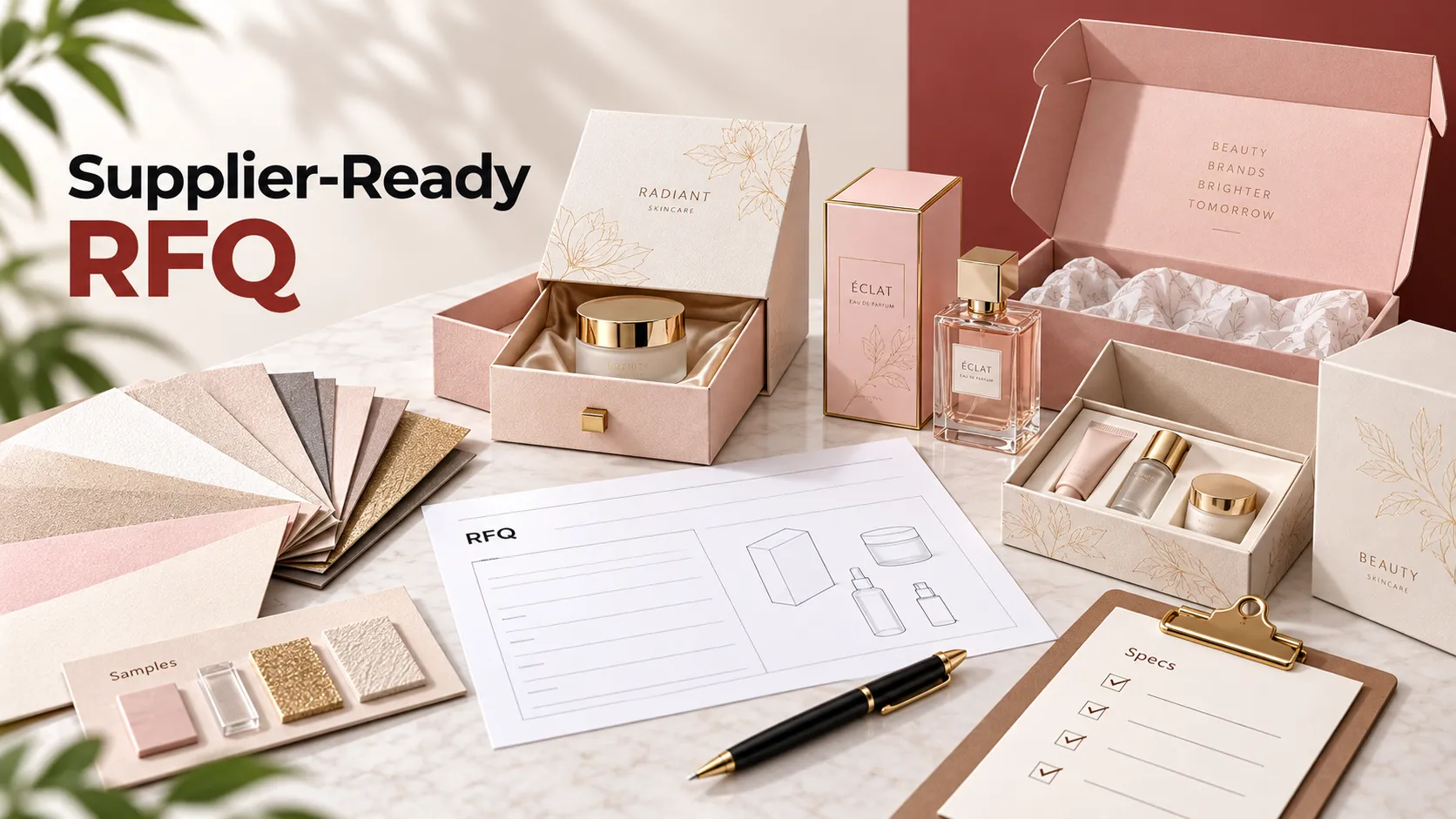
Custom cosmetic paper packaging RFQ gives beauty brands a clearer basis for supplier quotes. List the product type, dimensions, box structure, material preferences, artwork status, printing and finish options, insert needs, order quantity, and number of SKUs. Add the destination market and target date, and mark decisions that are still pending. To compare responses fairly, ask each supplier to quote against the same specification and itemize sample, tooling, freight, and other charges; confirm timing and any market-specific review needs for the actual project.
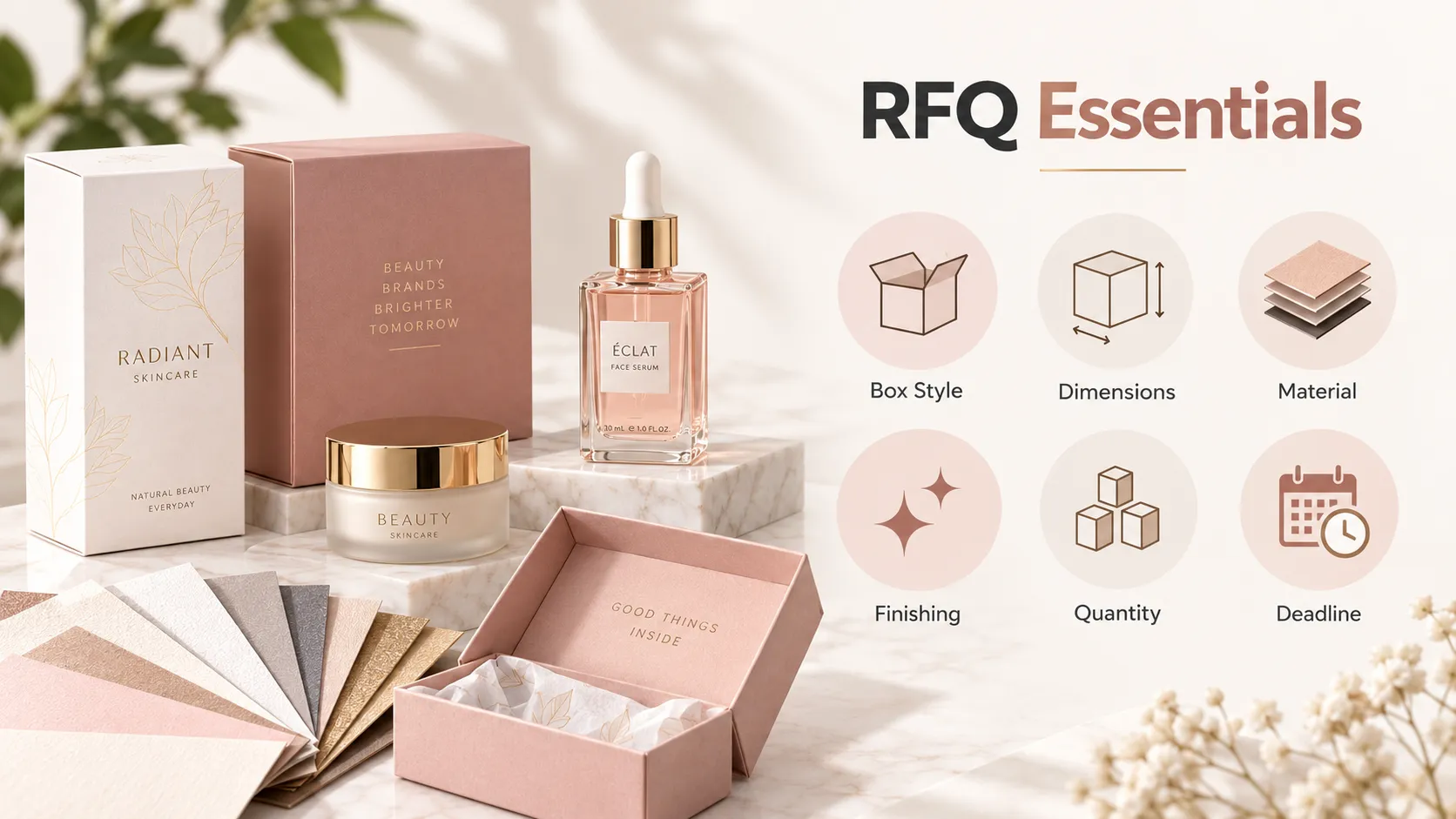
Start by determining the basic physical requirements for the custom cosmetic paper box.
Specify the box type: rigid gift box, folding carton, drawer box, or magnetic closure box.
Determine the precise internal dimensions to fit the bottle, jar, or skincare set.
Specify the paperboard type, thickness, and desired finishing options, such as matte lamination, hot stamping, embossing, or UV coating.
For export-oriented beauty products, consider target market compliance requirements, such as FSC certification for recycled materials or EU packaging waste regulations. Suppliers will provide more realistic quotes based on these details rather than just estimated ranges.
Suppliers cannot provide accurate quotes without clear design files. Your RFQ package should include the final die-line template, artwork files in vector format, color references (Pantone or CMYK values), and reference images of your preferred packaging style.
If the design is not yet finalized, provide a clear mood board and indicate which design elements are non-negotiable. Missing artwork or design changes after receiving a quote are primary causes of price adjustments and production delays in beauty packaging projects.
Clearly outline the scope of your order in the RFQ: the number of prototype samples, the Minimum Order Quantity (MOQ) for a trial run, and projected repeat order volumes. Many emerging beauty brands require small-batch trial runs before proceeding to mass production.
Additionally, list your expected lead times, shipping destinations, and preferred shipping terms. This enables the paper packaging factory to factor material availability, production scheduling, and export logistics costs into their quotation.
Outline your quality control standards in advance: surface tolerances, color matching criteria, barcode readability, and labeling regulations for the export destination. If you require third-party audit reports, test certificates, or special liners for glass cosmetic containers, specify these directly in your RFQ.
Brands that overlook this step often receive quotes that exclude compliance-related work, leading to additional costs later in the project.
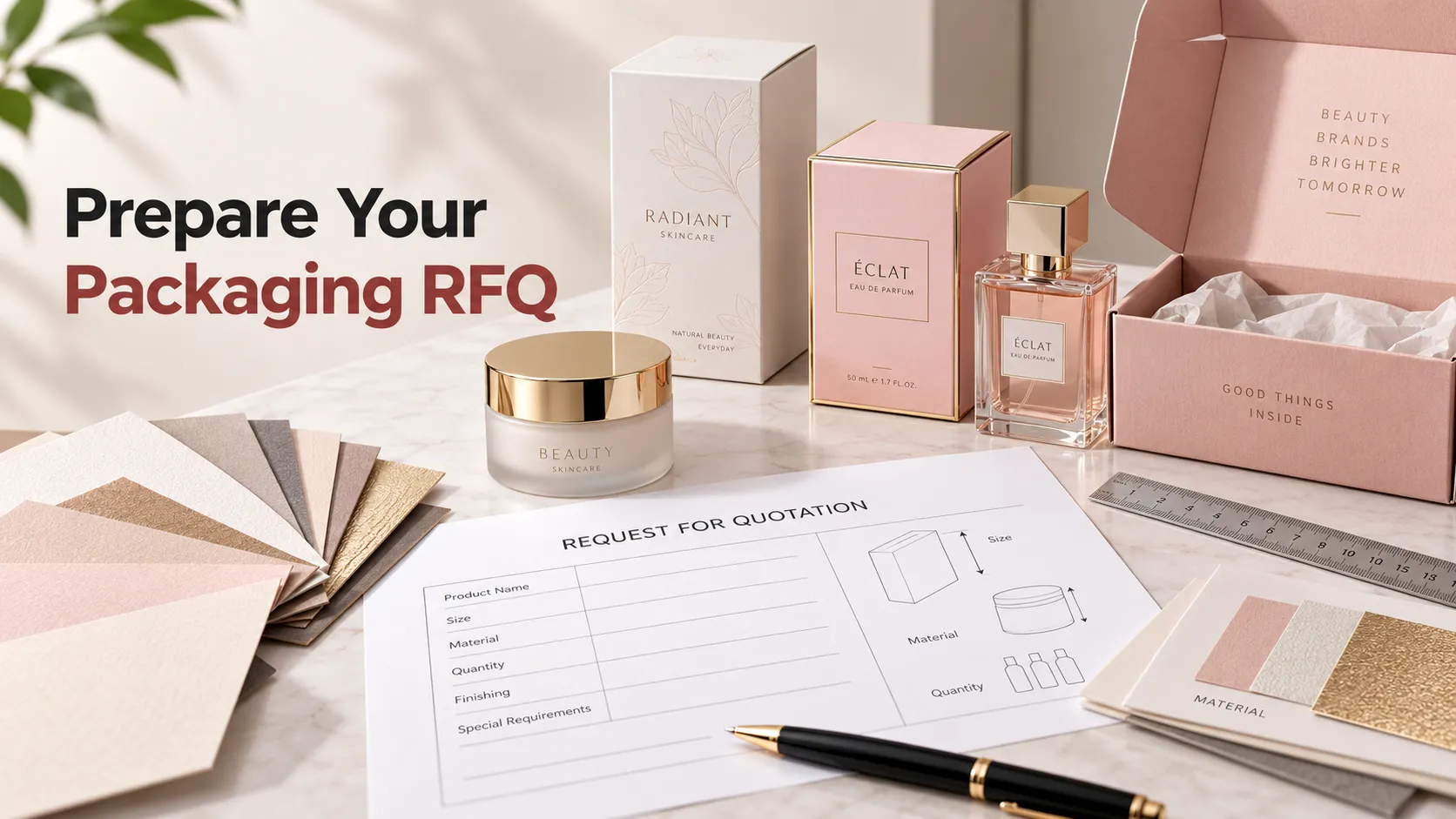
A complete RFQ can help suppliers identify missing details, but the final quote depends on confirmed specifications and scope. Compare responses using the same dimensions, material, printing, finishing, quantity, destination, and sample requirements; ask each supplier to show assumptions and excluded costs.
When a client’s internal team lacks sufficient technical experience, we collaborate closely with them to refine the RFQ documentation, thereby eliminating obstacles in cross-border cosmetic packaging projects.
A clear packaging RFQ gives buyers and suppliers a shared specification to review. Before sending it, check the box structure, product fit, materials, artwork, quantity, destination, and requested sample. The final quote and schedule should be confirmed against the approved project details.
Feel free to revisit our previous article: “Cómo verificar los detalles del empaque de productos cosméticos antes de la creación de prototipos.”
When you are ready to draft an RFQ for custom cosmetic paper packaging, please ponte en contacto con nuestro equipo; we are dedicated to providing professional support.