Descargar el catálogo de productos
Por favor, ingresa tu dirección de correo electrónico real y te enviaremos el catálogo electrónico a tu bandeja de entrada en breve.
Empaques cosméticos personalizados para marcas de belleza — solicita tu cotización hoy mismo.

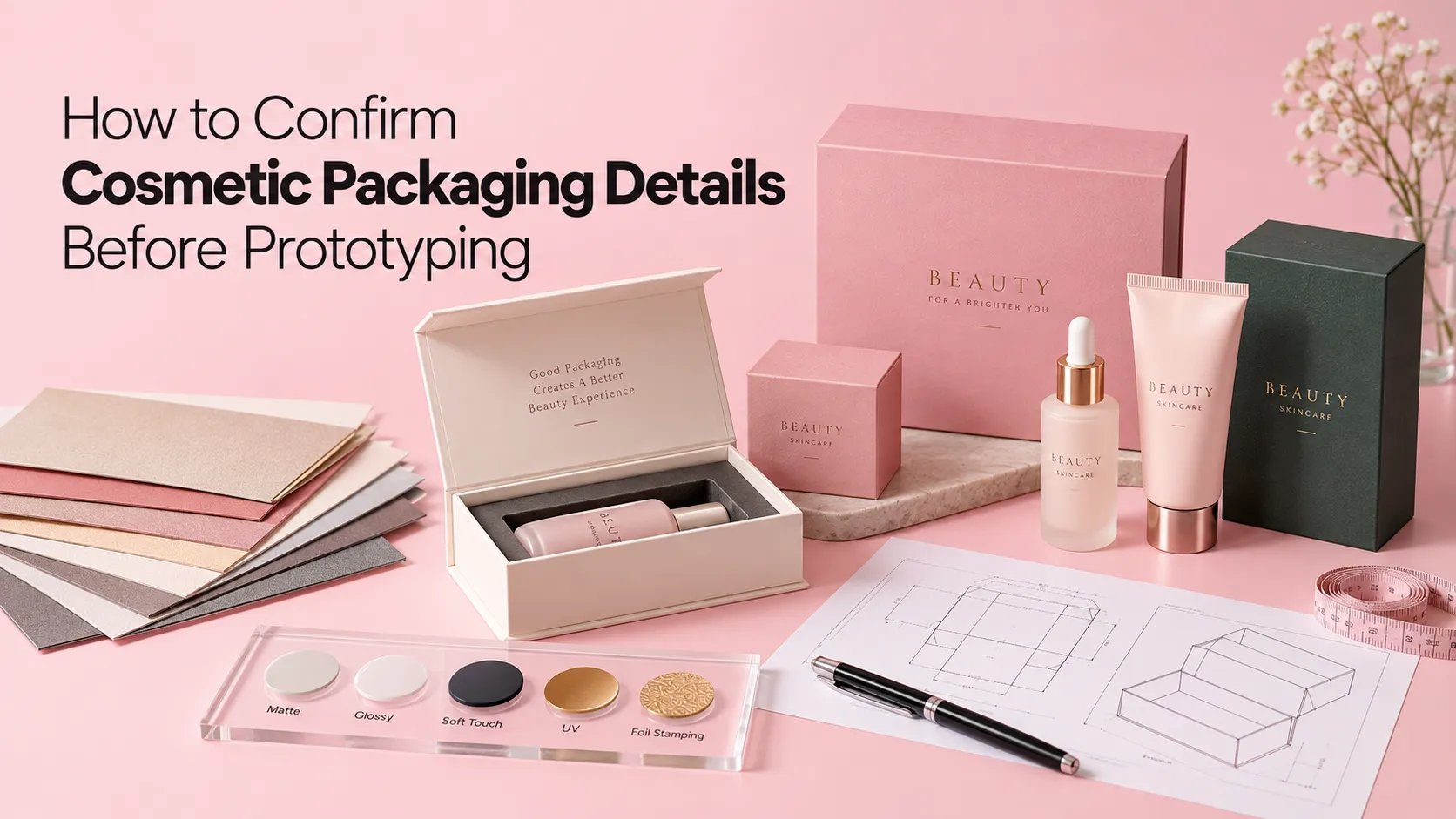
Issues such as samples not meeting expectations, design errors, material choices failing to comply with EU standards, or packaging dimensions not perfectly matching the container often stem from incomplete detail confirmation prior to prototyping.
Overlooking sample checks can lead to repeated revisions, extended lead times, and unexpected budget overruns. For packaging buyers, finalizing all key cosmetic packaging details upfront is the most effective way to streamline custom packaging projects.
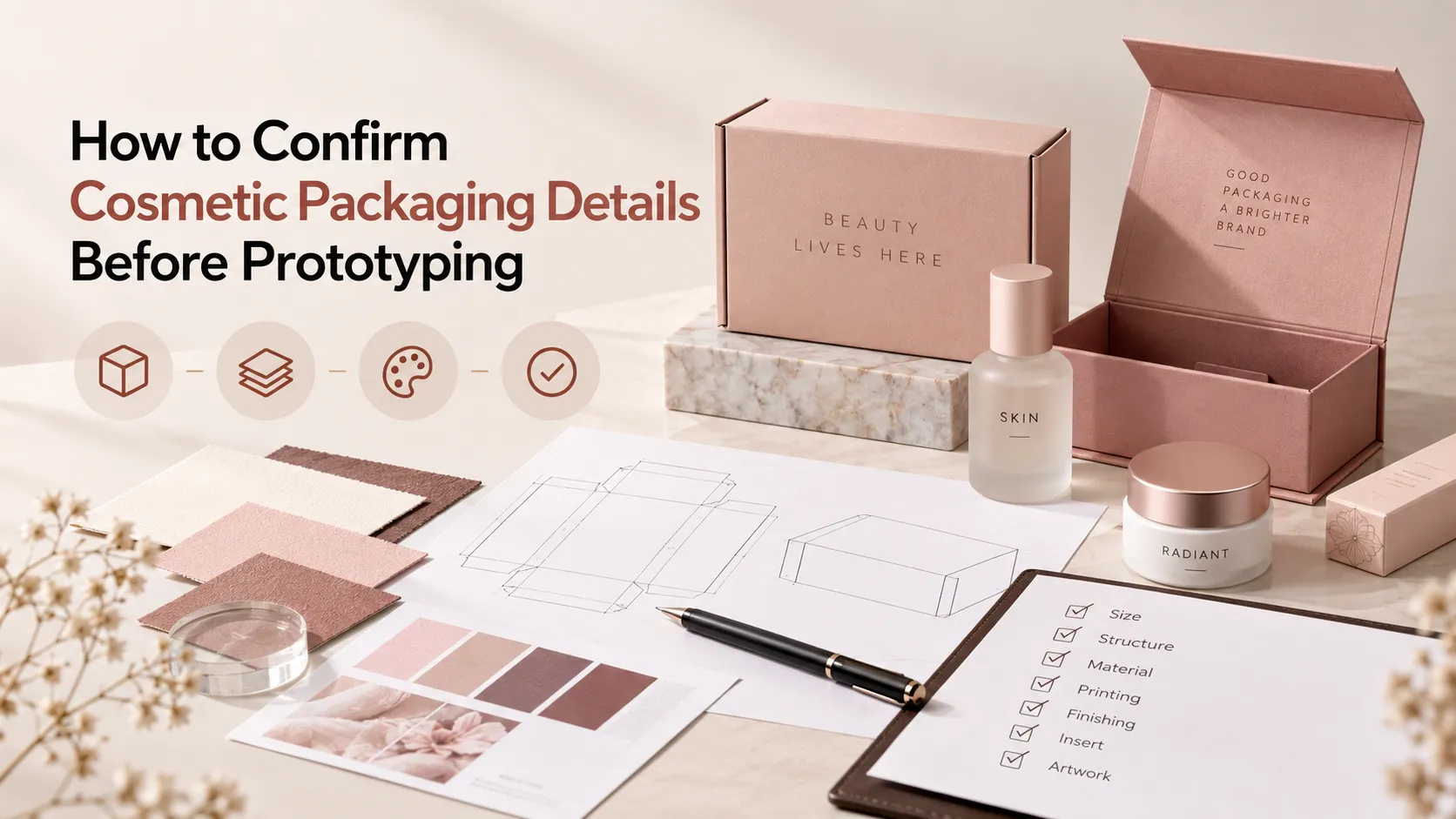
The first step before prototyping is defining product specifications. Confirm the precise internal dimensions of the cosmetic box, not just the external ones. Provide the manufacturer with actual samples of the bottles, jars, or tubes to avoid issues with the packaging being too loose or too tight.
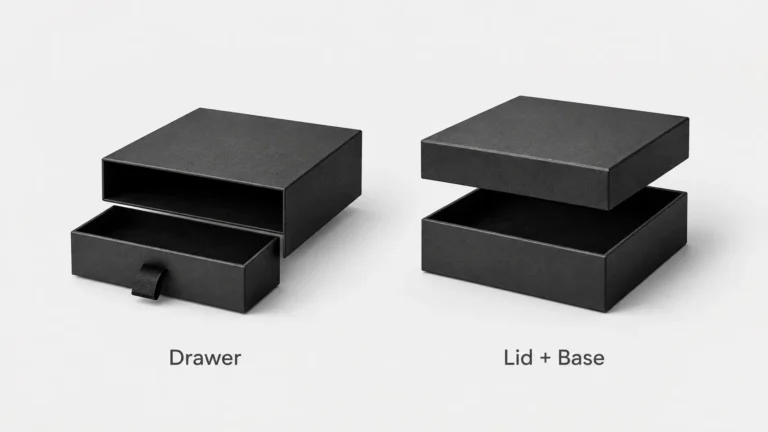
Clearly define the box structure: straight-tuck end, drawer-style, magnetic closure, or other styles. If custom paper inserts are required, specify the insert height, cutout shapes, and cushioning requirements. Data errors are a primary cause of failure in cosmetic packaging prototypes.
Raw material types directly impact the sample’s appearance and performance. Specify details such as paper grammage and whether recycled or coated paperboard is used. List all surface finishing processes: embossing, debossing, spot UV, hot stamping, or matte lamination. Different finishes create distinct visual and tactile effects, and certain combinations may impose production limitations.
For brands targeting the European market, confirm PPWR, EPR, and labeling requirements before prototyping. Include regulatory text, recycling symbols, and ingredient disclaimers in your design files. Modifying regulatory content after the prototype is produced wastes both time and money.
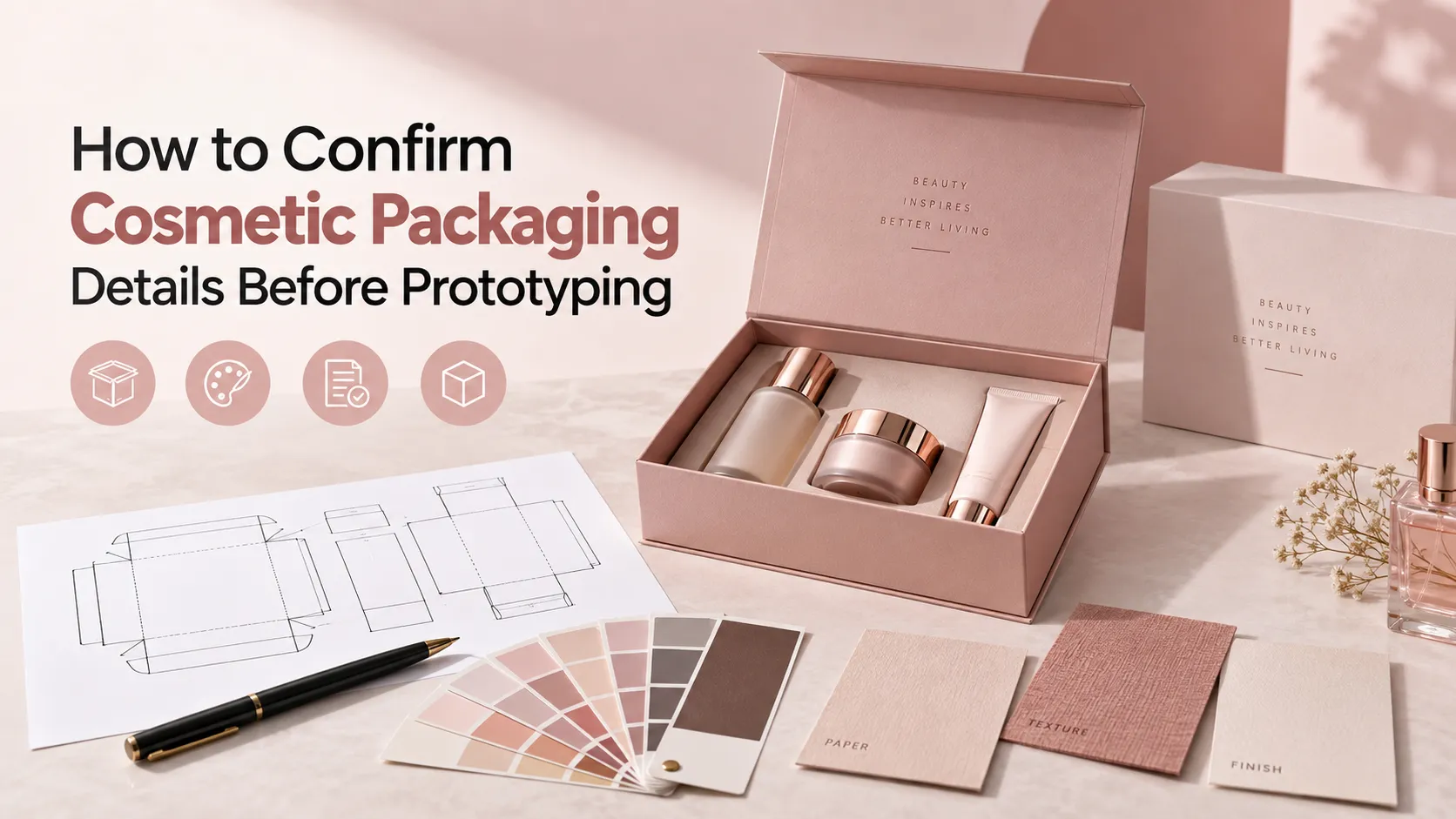
Vague color specifications often lead to discrepancies between prototypes and mass-produced items. Provide Pantone color codes or physical print swatches rather than relying solely on RGB screen files.
Confirm fonts, logo sizes, text layouts, barcode placement, and variable text for multi-SKU product lines.
Carefully check all text for spelling and translation errors. Before physical prototyping, request a PDF flat-layout dieline from the factory to identify layout errors early on.
Do not overlook contractual details during the prototyping phase. Confirm the sample Minimum Order Quantity (MOQ), turnaround time, costs, and whether the sample mold can be reused for mass production orders.
Agree on clear quality control standards, such as printing tolerances, seam standards, and scratch limits. For cross-border shipments, be sure to confirm shipping terms. Establishing clear expectations helps prevent disputes after sample delivery.
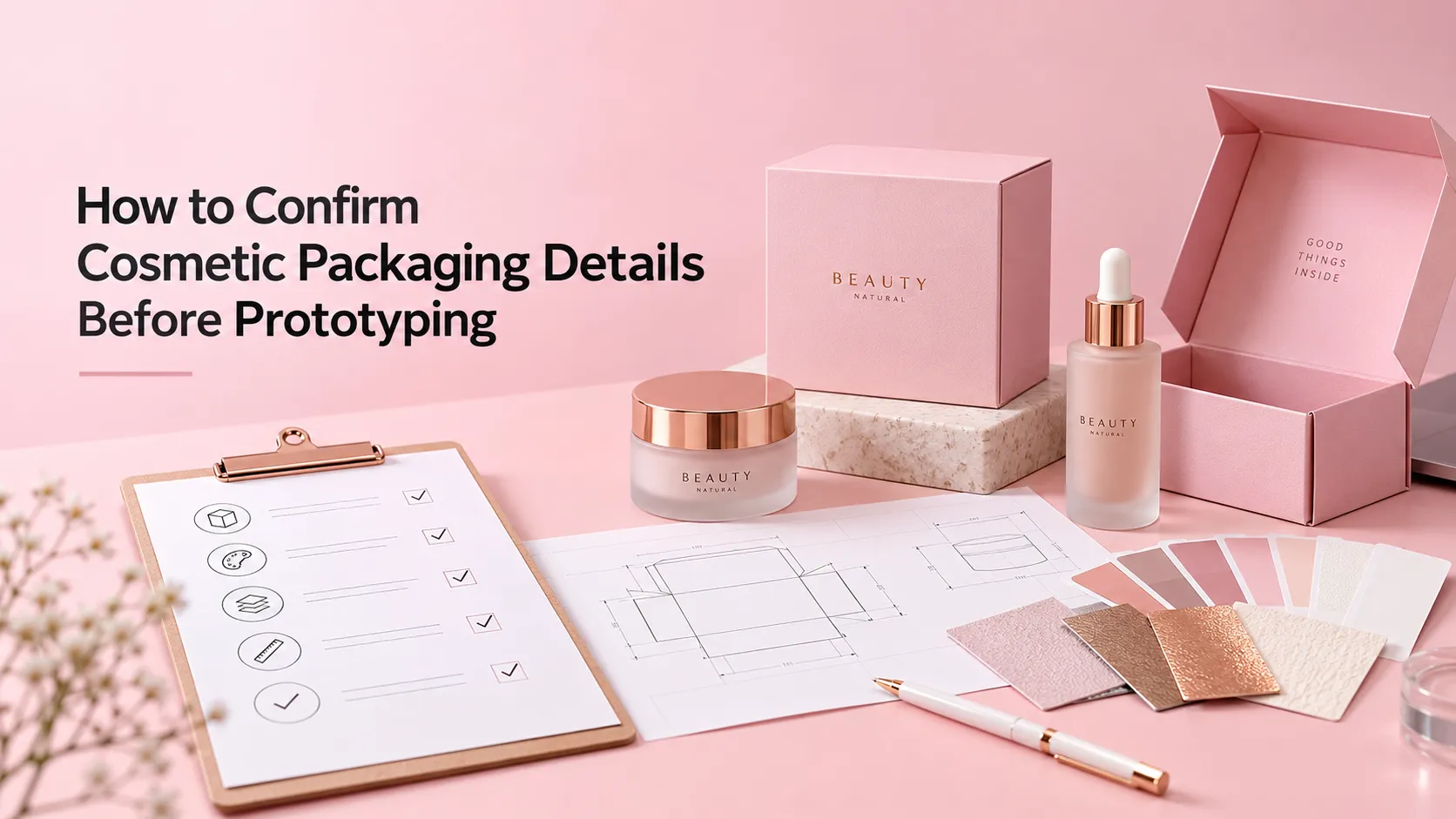
At Crown Win Packaging, we integrate these confirmation steps into the workflow for every custom cosmetic packaging project. Our professional project team verifies dimensions, die-cut lines, material options, artwork files, and export compliance checklists before initiating any sample production.
We provide global cosmetic brands and exporters with low-MOQ packaging samples, rigorous pre-sample documentation reviews, consistent quality control, and predictable lead times. Many skincare clients have reduced their sample revision cycles by over 50% by utilizing our pre-sample confirmation checklist prior to physical prototyping.
Confirming cosmetic packaging details before prototyping helps avoid unnecessary revisions, keeps budgets under control, and ensures the project stays on schedule. Focus on product specifications, materials and compliance, artwork color standards, and contractual terms.
Ready to start your cosmetic packaging project? Contact Crown Win Packaging today to get our complete pre-sample checklist for custom paper cosmetic packaging boxes.