Descarregue o catálogo de produtos
Por favor, introduza o seu endereço de e-mail verdadeiro e enviar-lhe-emos o catálogo eletrónico para a sua caixa de entrada em breve.
Embalagens cosméticas personalizadas para marcas de beleza — solicite hoje mesmo o seu orçamento.

Packaging for men’s grooming and skincare products must protect bottles and tubes, organize multi-item sets, and keep product information easy to find across retail and shipping channels. Across each format, packaging for men’s grooming should balance protection, clear labeling, and a consistent brand look.
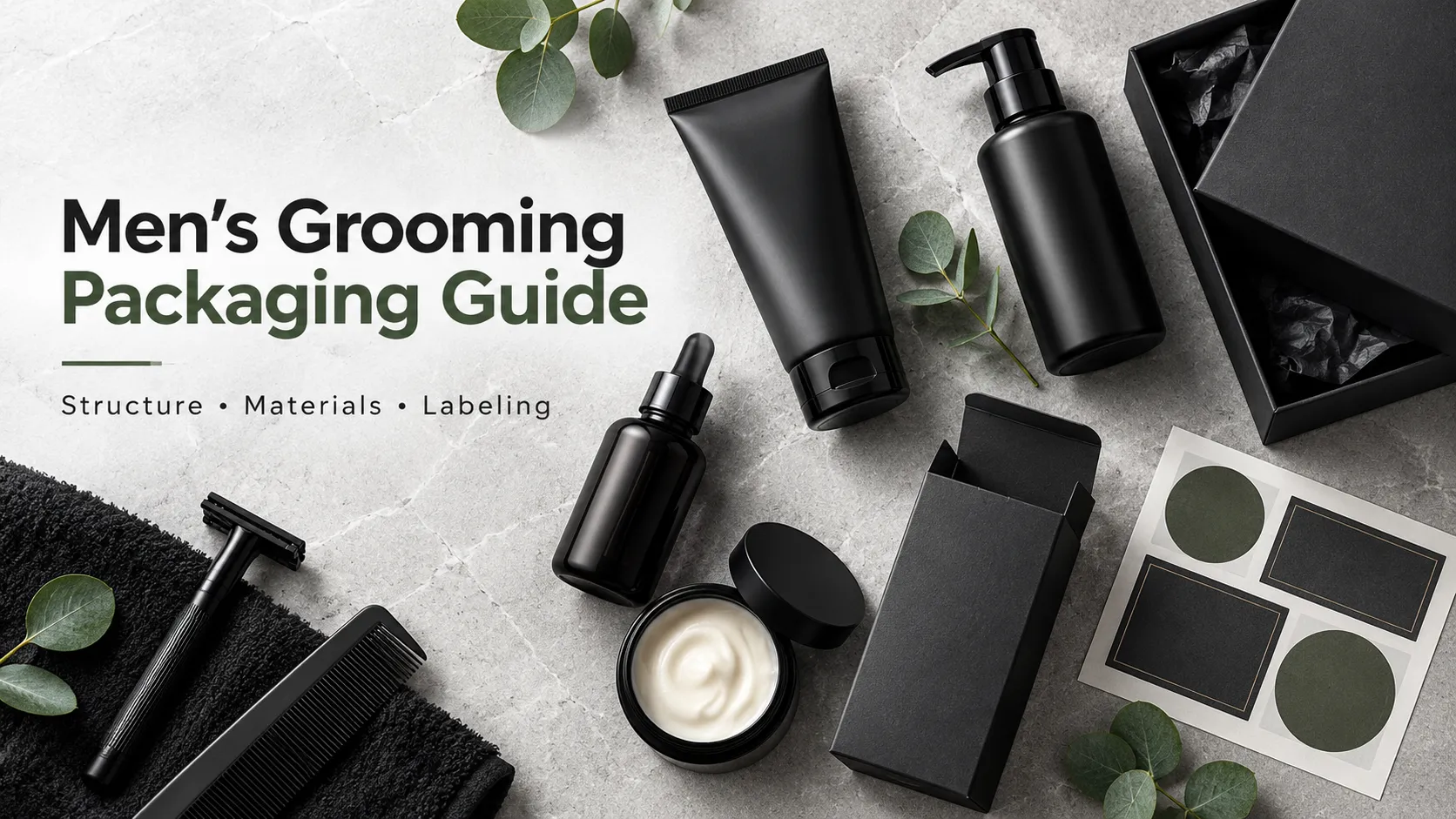
Before choosing a paper box, consider product dimensions, weight, intended use, sales channel, and label requirements. A clear visual system helps shoppers recognize each product without relying on a one-size-fits-all “masculine” style. This guide covers box structures, materials, print finishes, and label planning.
Shaving creams, cleansers, serums, and beard oils differ in form and usage; outer packaging can help consumers quickly distinguish between them through the use of color, typography, icons, and layout hierarchy.
During the design process, establish the reading order for the brand logo, product name, product type, and key information before selecting finishes such as matte surfaces, embossing, debossing, or spot foil stamping. Ensure visual effects serve the product while maintaining sufficient space and contrast for label text. Whether the packaging style is minimalist, rugged/outdoor, or premium gift-oriented, product information must remain clear and legible.
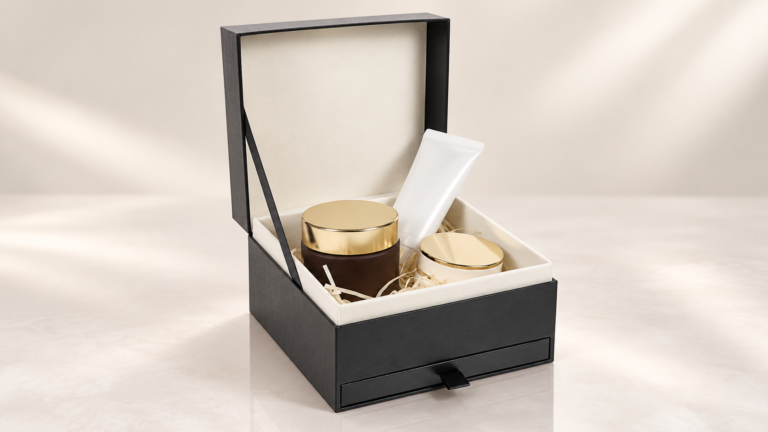
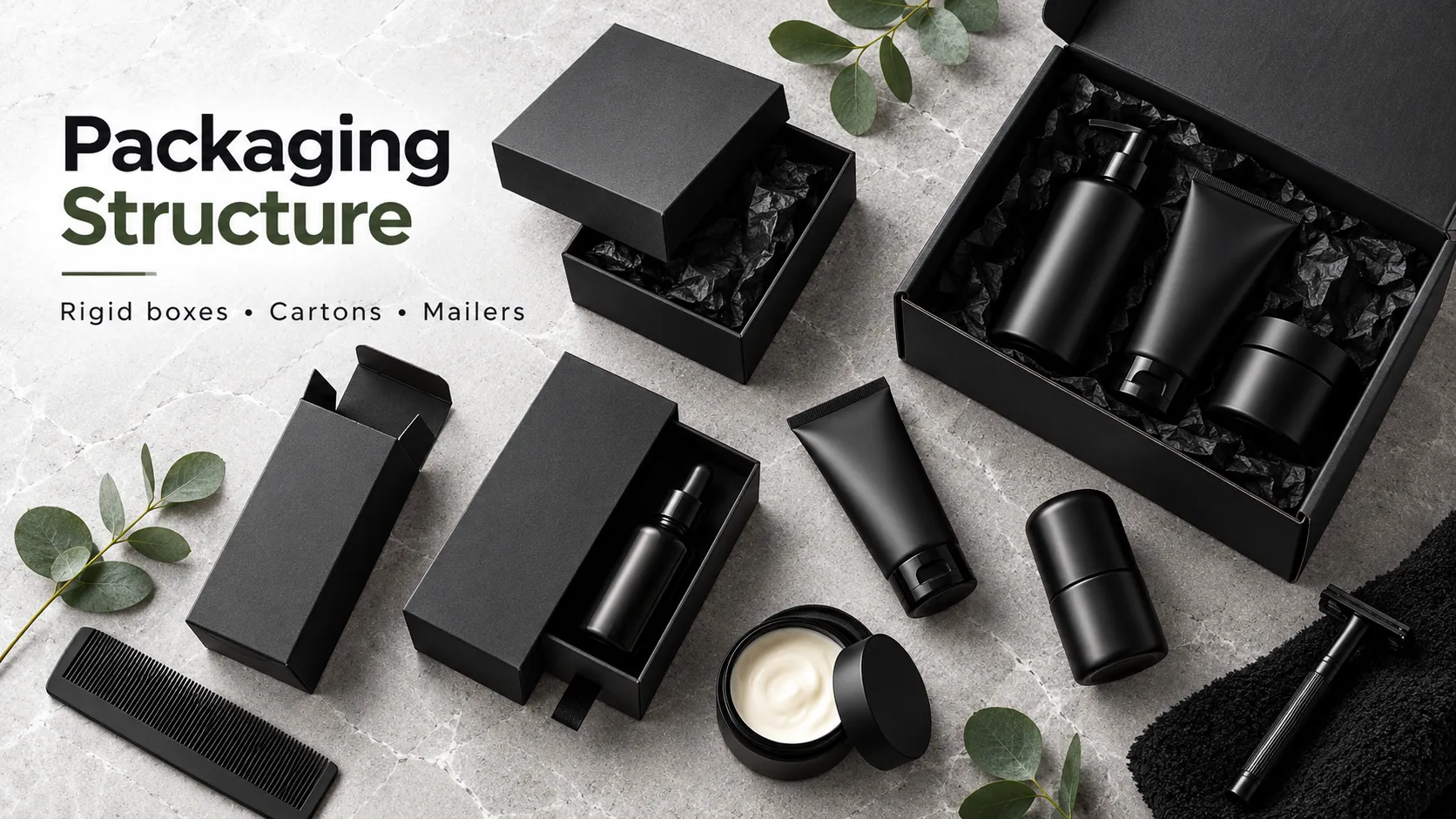
Packaging for men’s grooming lines often uses folding cartons for single bottles or tubes; shaving and beard-care kits, holiday bundles, and gift sets may use lid-and-base boxes, drawer-style boxes, or combination structures with internal inserts. Choose a structure based on the number of containers, weight, dimensions, display method, target price point, and shipping channels—not the appearance of an empty box alone.
Internal inserts help secure items—such as razors, glass bottles, pump bottles, or multi-piece sets—minimizing movement and preventing collisions within the box. During prototyping, verify that containers can be easily inserted and removed, the lid opens smoothly, and the insert does not deform or shed particles. Additionally, check for crushing, scuffing, or splitting after shipping tests. For long-distance transport, product protection relies on the integrated combination of the product packaging, the retail box, and the outer shipping carton; simply thickening the retail box is no substitute for a proper shipping packaging assessment.
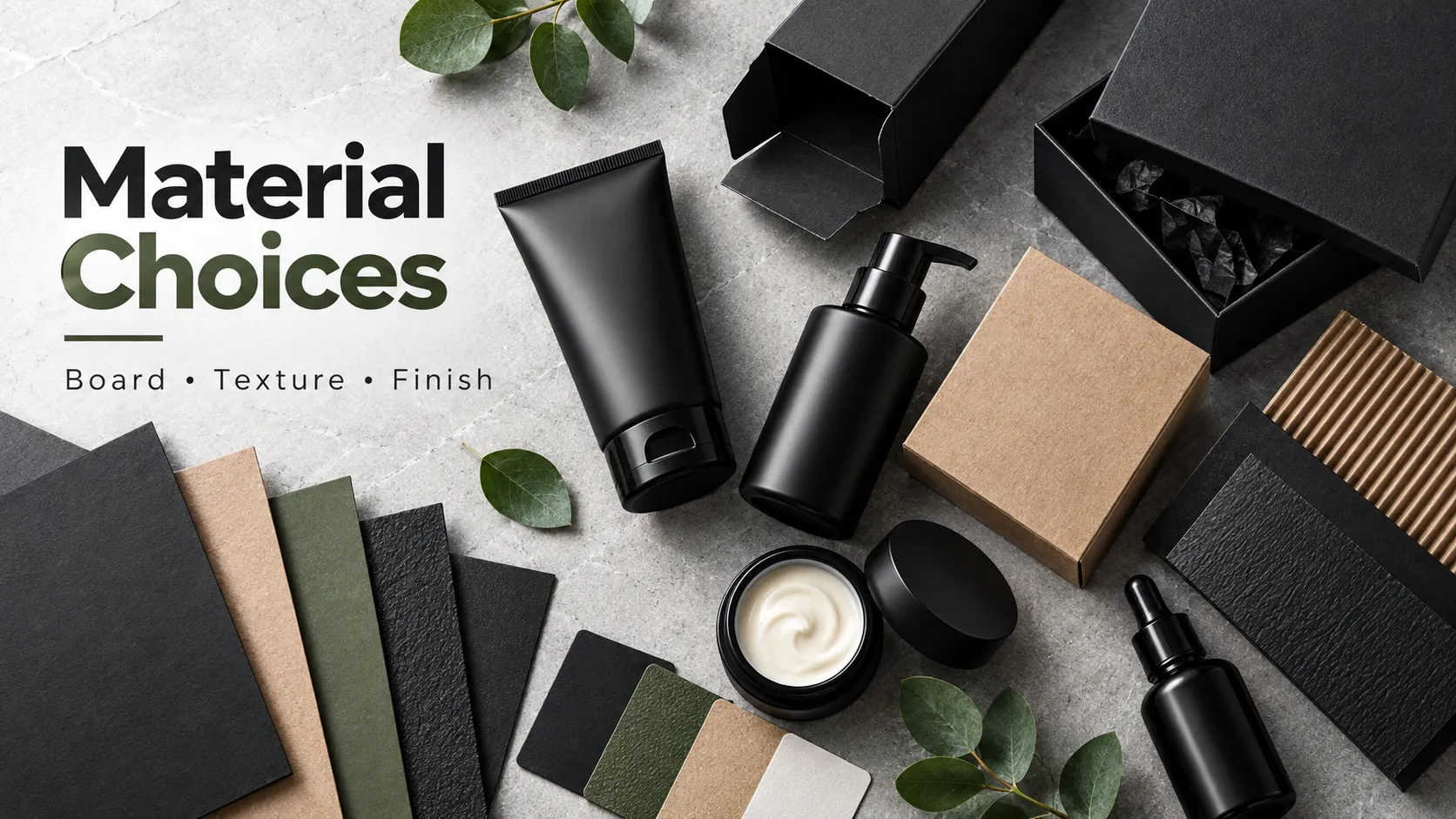
Paperboard weight and structural strength should match the box dimensions, product weight, insert design, display needs, and shipping method. Heavier board is not always better: excess material adds weight, while too little support can cause deformation. Before approving the die-line, test samples made from materials close to production stock for fold lines, locking tabs, corners, and storage performance. When planning packaging for men’s grooming products, compare these factors together so the box protects the item without adding unnecessary material.
Packaging for men’s grooming products such as beard oil starts with leak prevention at the bottle, pump, cap, and seal. If the box exterior may encounter oil or moisture, consult the supplier about suitable surface treatments and verify them on actual samples. Standard paper boxes are neither airtight nor waterproof; coating performance depends on the material and process combination.
If the project requires low-odor paper, recycled paper, or FSC-certified sources, specify these requirements during the quoting and prototyping stages and request relevant material data. Claims regarding FSC or recycled materials must align with the actual paper stock and supply chain documentation; one cannot assume the entire package meets all safety, sustainability, or export requirements based solely on the paper’s name.
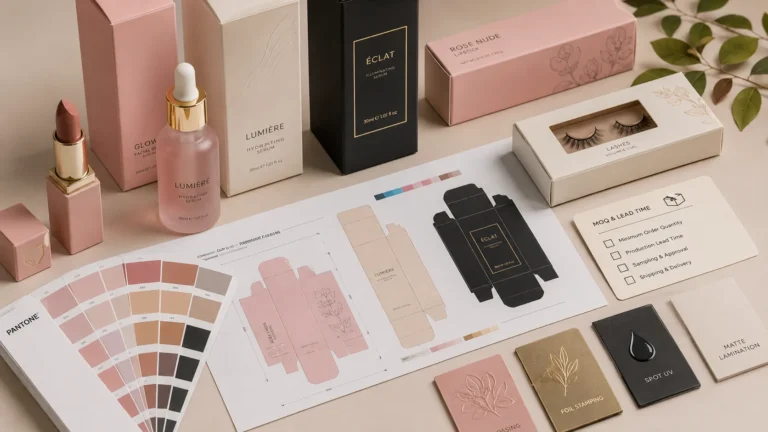
Matte lamination, embossing, debossing, and subtle foil stamping can highlight brand identity; spot UV or high-gloss finishes may also be considered based on the visual design. No single surface treatment suits every men’s grooming brand; when sourcing, compare costs, tactile feel, abrasion resistance, and print clarity.
During prototype approval, check for uniformity in large areas of dark ink, susceptibility to surface scratching or blocking (sticking), the stability of foil stamping and embossing near fold lines, and the legibility of fine text on the finished product. You may request that the supplier list the specific paper, ink, lamination or coating, adhesives, and insert materials used, and provide relevant declarations or technical data sheets. REACH obligations depend on the specific substance, the form of the article, and the role within the supply chain; therefore, “REACH compliance” should not be treated as a blanket certification applicable to all printed packaging. (ECHA: Communication in the supply chain for substances in articles under REACH)
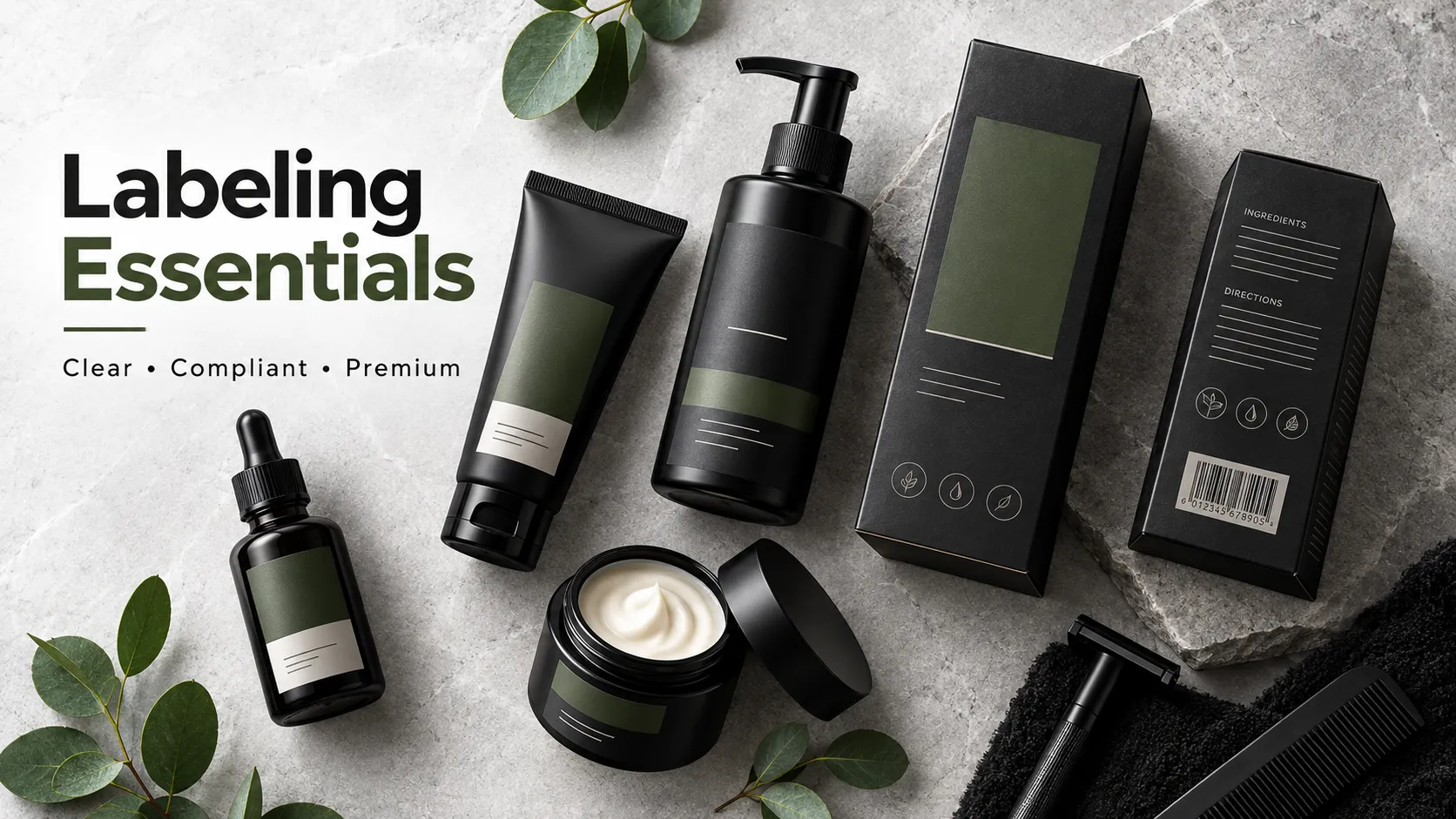
Before finalizing the structural design and die-cut layout, the brand owner should provide the approved label copy, target sales regions, and language versions. Article 19 of the EU Cosmetics Regulation covers labeling details such as Responsible Person information, net content, date information, precautions for use, batch number, product function, and ingredients; specific content and layout positioning must be confirmed based on the product and packaging format. Any claims regarding product efficacy or test results must be supported by evidence relevant to the product. (EU Cosmetics Regulation 1223/2009, Article 19; EU Common Criteria for Cosmetic Claims – Regulation (EU) No 655/2013)
For UK sales, confirm the relevant jurisdiction and Responsible Person arrangements before approving labels. Great Britain and Northern Ireland have different arrangements, so have the brand’s compliance lead review the final copy and layout for the destination market.
For cosmetics retailed in the US, it is generally necessary to verify product identity, net quantity, ingredient declarations, information on the responsible party, and any required warnings or safe-use instructions. FDA regulations mandate labeling information tailored to the specific product and its associated risks; there is no universal “disclaimer” applicable to all cosmetics. If a product claims to treat or prevent disease, or affect the structure or function of the body, it may be classified as a drug or a drug-cosmetic combination product, requiring the brand’s regulatory lead to further confirm its classification and labeling. (FDA: Summary of cosmetic labeling requirements, FDA: Cosmetic vs. drug claims)
The EU Packaging and Packaging Waste Regulation (PPWR, Regulation (EU) 2025/40) applies from August 12, 2026, though certain requirements are subject to a phased implementation schedule. Under Article 12, harmonized labels for identifying packaging materials apply from August 12, 2028, or 24 months after the relevant implementing act enters into force—whichever is later. Therefore, the PPWR cannot be simplified to the notion that “all paper boxes must immediately bear a unified recycling symbol starting August 2026.” For export projects, it is also necessary to verify producer responsibility and packaging waste requirements based on the destination and your role in the supply chain. (European Commission: Packaging and Packaging Waste Regulation; PPWR Regulation (EU) 2025/40, Article 12 and application dates)
When requesting packaging for men’s grooming products, share the following details with carton suppliers to help them prepare a suitable quote or structural recommendation:
Product dimensions, materials, quantity, and weight
Intended use, projected order volume, sales channels, and target markets
Requirements for inserts, gift box structures, or additional shipping protection
Label copy, language versions, and confirmed product claims
Preferences regarding paper sourcing, printing processes, surface finishes, and material documentation
MOQs, sampling schedules, material options, and lead times depend on the box style, paper type, printing process, order volume, and project specifications; we recommend confirming these details item-by-item before prototyping. Crown Win Packaging can discuss structural designs, materials, inserts, and printing solutions for men’s grooming and skincare product cartons; specific sample costs, MOQs, testing documentation, and lead times will be finalized based on the specific solution and order confirmation.
If your project focuses on skincare brands, you may also wish to view our Embalagens personalizadas para produtos de cuidados da pele.
Please feel free to contact Crown Win Packaging with your product dimensions, target markets, order quantities, and design direction to discuss carton solutions and quotes tailored to your product line.
For multi-piece sets, gift packs, or products requiring a premium presentation, consider “lid-and-base” or drawer-style boxes; standard retail packaging for individual items can often start with folding cartons. You should also create prototypes to compare options based on product weight, protection requirements, budget, and shipping methods.
Not necessarily. First, verify that the bottle and seal effectively prevent leakage and assess whether the box will come into contact with oil during storage, transport, or use. If an oil-resistant finish is needed, test its effectiveness using project samples; remember that the outer carton cannot replace sealed primary packaging.
No. The FDA requires specific labeling information and necessary warnings based on the cosmetic category and risk profile, but there is no single, universal disclaimer for all cosmetics. The final copy should be confirmed by the brand based on product classification and sales channels.
The EU PPWR applies from August 12, 2026, though there is a phased timeline for requirements such as harmonized labeling. Specific obligations should be determined based on packaging type, destination market, and subsequent implementation guidelines.