Descarregue o catálogo de produtos
Por favor, introduza o seu endereço de e-mail verdadeiro e enviar-lhe-emos o catálogo eletrónico para a sua caixa de entrada em breve.
Embalagens cosméticas personalizadas para marcas de beleza — solicite hoje mesmo o seu orçamento.

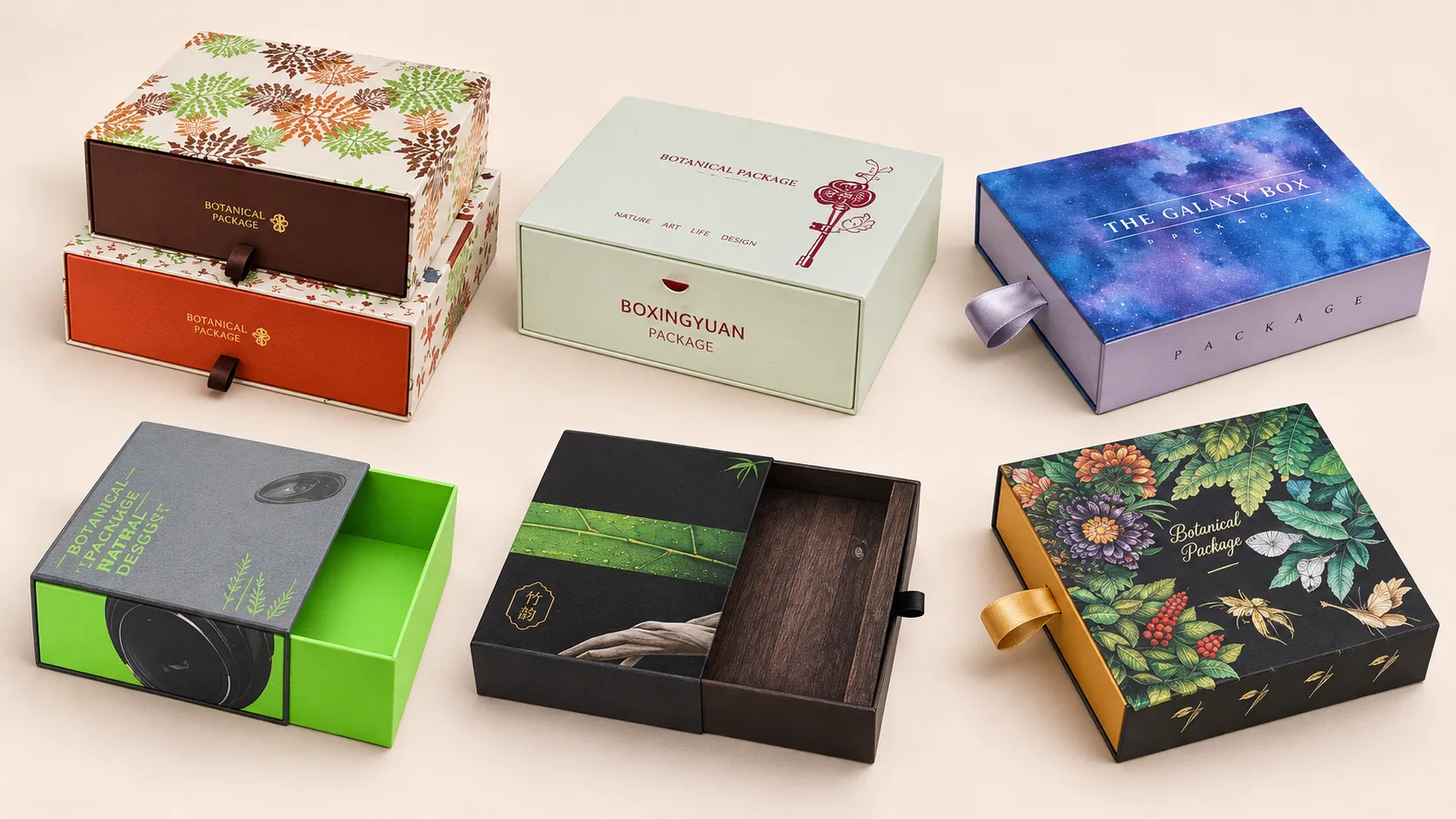
A gift card drawer box should keep the main card and every printed piece in place when the recipient pulls the drawer open. Start with the contents of one finished set, then design the insert, check the usable depth, and test the opening motion with a loaded sample. An attractive sleeve cannot correct a card that shifts or a drawer that catches.
Separate the main gift card from message cards, instruction leaflets, envelopes, and any accessories. For each piece, record its quantity per set, finished length and width, and thickness. Measure folded or wrapped pieces as they will actually be packed.
Decide which item the recipient should see first. A prominent recess can present the main card, while a separate pocket or stack position can hold the supporting pieces. Ask whether those pieces must be visible immediately or can sit beneath the top layer.
Give the supplier the maximum planned configuration as well as the standard set. If a holiday version adds an insert card, test both versions before assuming that the same drawer works for each.
Use the actual card or a dimensioned sample. Two cards of the same nominal size may behave differently if one is thicker, has rounded corners, or comes in an envelope. Check that the recess keeps the card centered without pinching its edges. A finger notch or an appropriately positioned lift ribbon can make removal easier.
Check access as well as retention. A recess that holds the card firmly may still be awkward if the recipient cannot get a finger under it. Conversely, a larger cutout may make removal easy but let the card slide during opening. Have the supplier confirm the practical clearance for the actual card and insert construction.
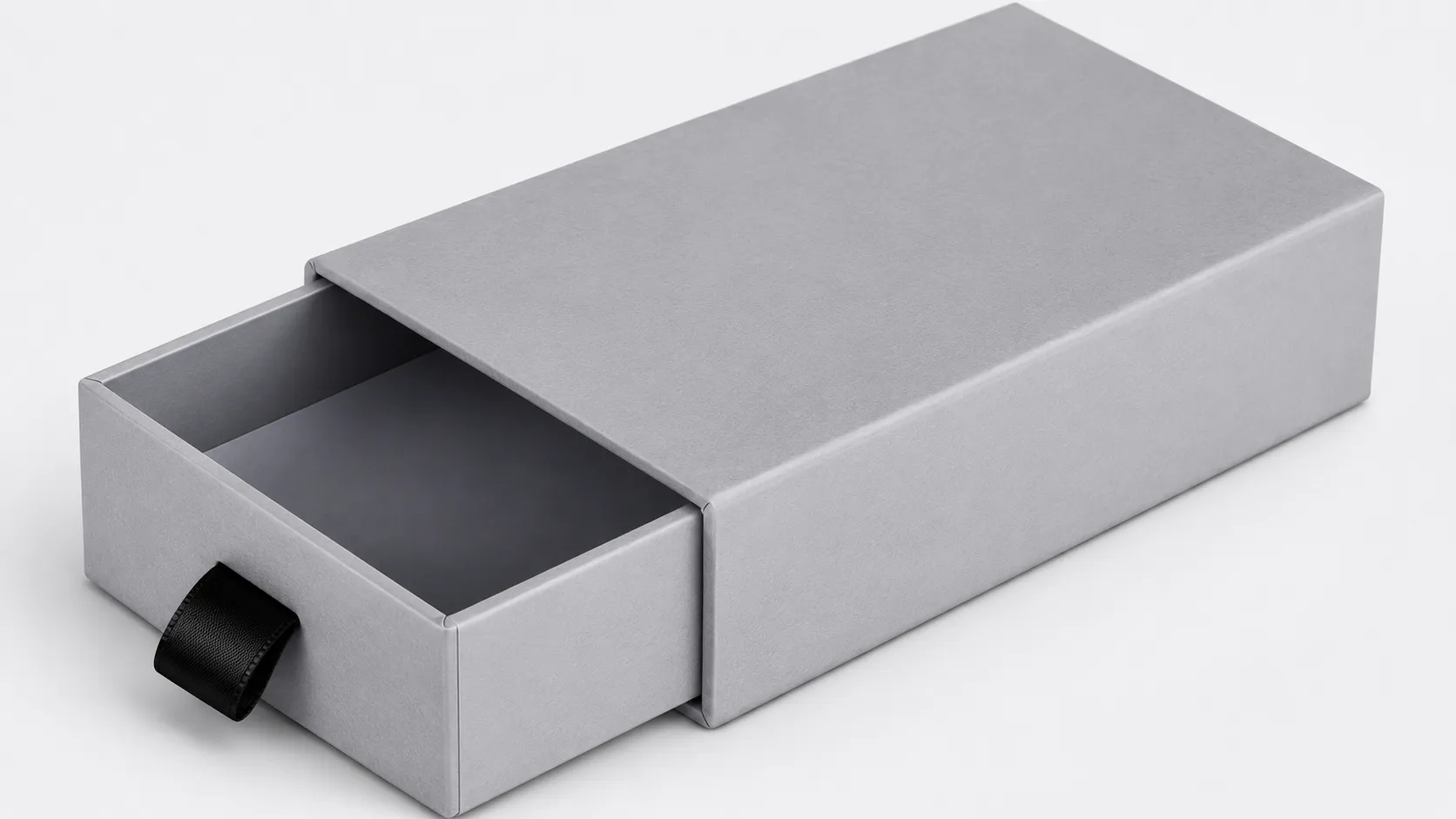
Ask for the usable internal length, width, and depth of the drawer. The outer dimensions do not tell you how much room remains once the insert, liner, card stack, and folded ribbon are in place. Check the tallest part of the assembled set against the space under the sleeve.
Measure the full stack at its thickest point, including folds, overlapping paper, or the flap of an envelope. Fit the pieces in the intended order. Close the loaded drawer without pressing on the contents, then reopen it to check for rubbing, bent edges, or cards lifting out of their positions.
Check that the pull is easy to grip when the drawer is fully closed. Pull it straight and then slightly off-center as a recipient might. Watch for the drawer tilting, the ribbon rubbing against the sleeve, or the cards moving as the drawer stops. If the design needs to limit how far the drawer opens, discuss whether a stop can be built into the selected structure and confirm it on the sample.
Use the intended board, wrap, and finish when checking the final feel of the opening. Changes to those materials can alter how the drawer slides, even when the drawing shows the same nominal dimensions. Agree on what a pass looks like: the drawer opens without catching, the main card stays in its recess, and the supporting pieces remain easy to remove.
A video can show the packing sequence, the location of the ribbon pull, and whether the contents visibly shift during opening. Ask for a continuous view of the fully loaded set being closed, opened, and emptied. That makes the review more useful than a close-up of the empty box.
Use a physical sample when fit, resistance, removal, or the feel of a soft-touch finish remains uncertain. Record which sample version was reviewed and which details still need approval. Our guide to pre-production packaging samples explains how a sample can support the decision before bulk production.
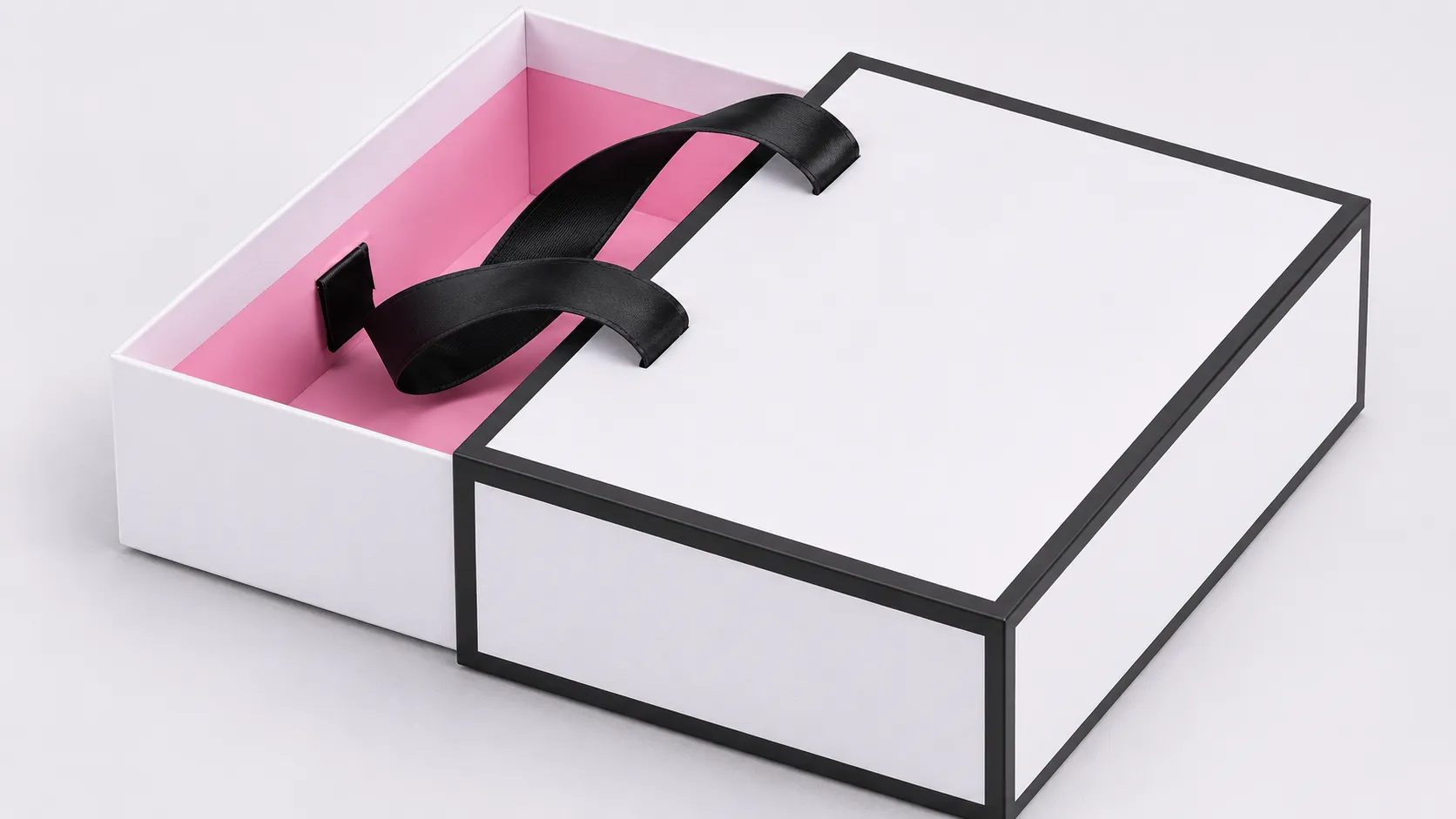
Ask the supplier to state what one quoted set contains. List the sleeve and drawer, insert, ribbon pull, main card, each additional printed piece, and assembly. Ask how sampling and shipping are priced. The quote should state whether the cards are supplied by the buyer or printed and packed by the supplier.
If the number of printed cards has not been confirmed, ask for an estimate with the assumed count stated clearly. If that count changes, recheck the depth, layout, assembly work, and price together. If the gift card set has a fixed launch date, use our custom packaging production timing guide to clarify which factory stages the estimate covers.
In an anonymized Scandinavian inquiry, a buyer requested a rigid drawer box with a dark soft-touch sleeve, a contrasting drawer, a card recess, and a ribbon pull. The set included a gift card and additional printed cards. The buyer requested separate pricing for the components and was open to an initial sample review by video. The number of cards per set and the final approval method still needed confirmation.
The practical next step was to confirm the complete set list and pack order before settling the tray depth or approving the quote. This example describes an inquiry and its open decisions, rather than a completed production project.
It can work if the stack has a defined position and stays tidy during opening and removal. Test the smallest and largest planned stacks. If the main card needs to sit in a particular position, a recess or separate holder gives it a defined place.
Base the depth on the actual card, accompanying pieces, and the usable space under the sleeve. Check that the card is supported and easy to lift, and that the fully loaded drawer can close without rubbing. There is no single recess depth for every card set.
These are two separate functions: the drawer pull opens the box, while a lift ribbon helps remove the card. If you want both, show their positions on the sample and check that the ribbons do not interfere when the drawer closes.
It may be enough for an initial review of appearance and opening motion. If card fit, finish, or the force needed to open the drawer matters to the project, review a physical sample with the actual contents before approving those details.
Send the card dimensions and thickness, the quantity of every piece per set, the overall order quantity, the intended pack layout, finish references, and the delivery destination. Mention whether the supplier should print or assemble the cards and whether you need a physical sample.
Share a photo or sketch of the proposed set, the dimensions of each piece, and the total quantity. If you are choosing between two card counts or layouts, ask for both to be reviewed so you can compare the insert, usable depth, and quote on the same basis.