Télécharger le catalogue de produits
Veuillez saisir votre véritable adresse e-mail ; nous vous enverrons le catalogue électronique dans votre boîte de réception sous peu.
Emballages cosmétiques sur mesure pour les marques de beauté — demandez votre devis dès aujourd'hui.

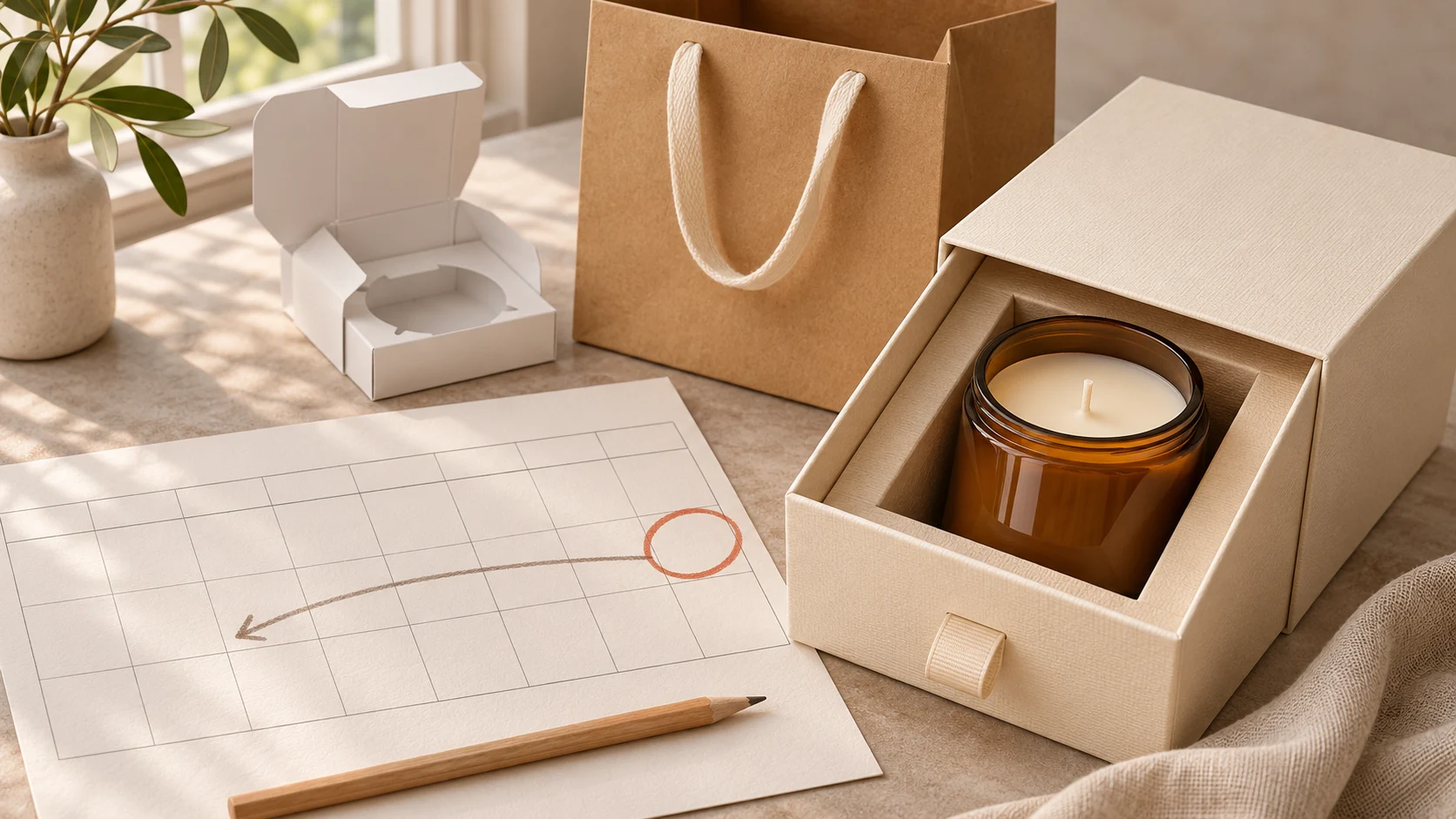
Build your packaging timeline backward from the date your team needs the boxes ready to use. Start with the warehouse, packing line, or event venue that must receive them. Then work back through receiving, freight, factory release, production, sample approval, and artwork. This tells you when each decision must be made and where you can still change the plan.
A product launch, a warehouse delivery, and a factory completion date are three different milestones. If the launch is on a Friday but your team needs several days to fill the boxes and check the finished kits, Friday is already too late for packaging delivery.
Confirm the delivery address, receiving hours, and the time needed for counting, inspection, assembly, or kitting. For an event, ask when the venue or fulfillment partner stops accepting deliveries. Record the earliest acceptable receiving date and the latest date the packaging must be available for use.
Use the flowchart as a packaging timeline checklist. For each step, write down the date, the person responsible, and what must be confirmed before work can move forward. If you plan to send samples by parcel, review your carrier’s packing instructions before booking; UPS’s parcel packing guide is one reference. Keep sample delivery separate from bulk freight in the packaging timeline so a delay in either is easy to spot.

Give each milestone an owner, a latest acceptable date, and a clear approval signal. For example, “sample approved” should identify the actual sample version and what was accepted: fit, construction, print, or finish. Our guide to pre-production samples explains what this stage can verify.
Suppose a launch is on 30 October and the packing team needs the boxes by 23 October. A buyer might set 20 October as the planned warehouse delivery date to leave three days of margin. If the supplier and forwarder estimate 12 calendar days from factory release to warehouse delivery, the release target becomes 8 October. If production, inspection, and packing are estimated to take another 18 calendar days, final approval would be due by 20 September. The sample must reach the reviewer before that date with time for review or revision.
These dates and durations are hypothetical, not a quotation or a standard lead time. Ask each party whether its estimate uses calendar days or working days, and check closures, review availability, and shipment cutoff dates. The arithmetic is simple; confirming what each estimate includes is the important part.
Identify the milestone that is holding up the project before paying to accelerate a later stage. If artwork is still open or a new structure needs another sample, faster freight can only recover time after the goods are ready.
In an anonymized Canadian inquiry, a buyer considered a small trial of textured candle drawer boxes and matching paper bags for an event. The buyer later indicated that the original arrival date might no longer work. Before comparing expedited freight, the useful questions were whether the event date had changed, whether both components needed to arrive together, and whether an adapted existing structure would be acceptable.
The inquiry illustrates why an old deadline should not stay in the brief once the target changes. A simpler box might help only if it fits the candle, meets the presentation requirements, and is approved in time. The case describes planning decisions from an inquiry, with no claim about production or delivery outcomes.
Share the launch or event date, the date packaging must be ready to use, the delivery postcode, the quantity needed for launch, and the full order quantity. Include product dimensions, packaging components, current artwork status, and any mandatory finishes or approvals. If the date is fixed, identify which requirements can change and which cannot.
Request a Packaging Timeline and Quote
Start as soon as you know the target receiving date and have enough product information to discuss structure. Work backward using estimates for your own sample, approval, production, and delivery stages. Leave time for a revision if the structure is new.
No. Production lead time normally covers a defined factory stage. Confirm its start and end points, then account separately for inspection, packing, pickup, freight, and delivery to the receiving address where they are excluded.
You can ask for estimates and discuss provisional options. Before committing to a booking, confirm the release date, carton dimensions, shipment weight, and any cancellation or change terms with the supplier and forwarder.
They can be assessed as separate deliveries. Check the quantities needed for each kit, the ready dates of both components, and whether separate shipments would leave your team unable to assemble the launch order.
Tell the supplier which date changed and confirm the new destination deadline. Review remaining approvals, the factory schedule, shipment cutoffs, and quote assumptions before treating the updated timeline as agreed.