تنزيل كتالوج المنتجات
يرجى إدخال عنوان بريدك الإلكتروني الحقيقي، وسنرسل الكتالوج الإلكتروني إلى صندوق الوارد الخاص بك قريبًا.
تغليف مستحضرات التجميل المصمم خصيصًا لعلامات التجميل — اطلب عرض الأسعار اليوم.

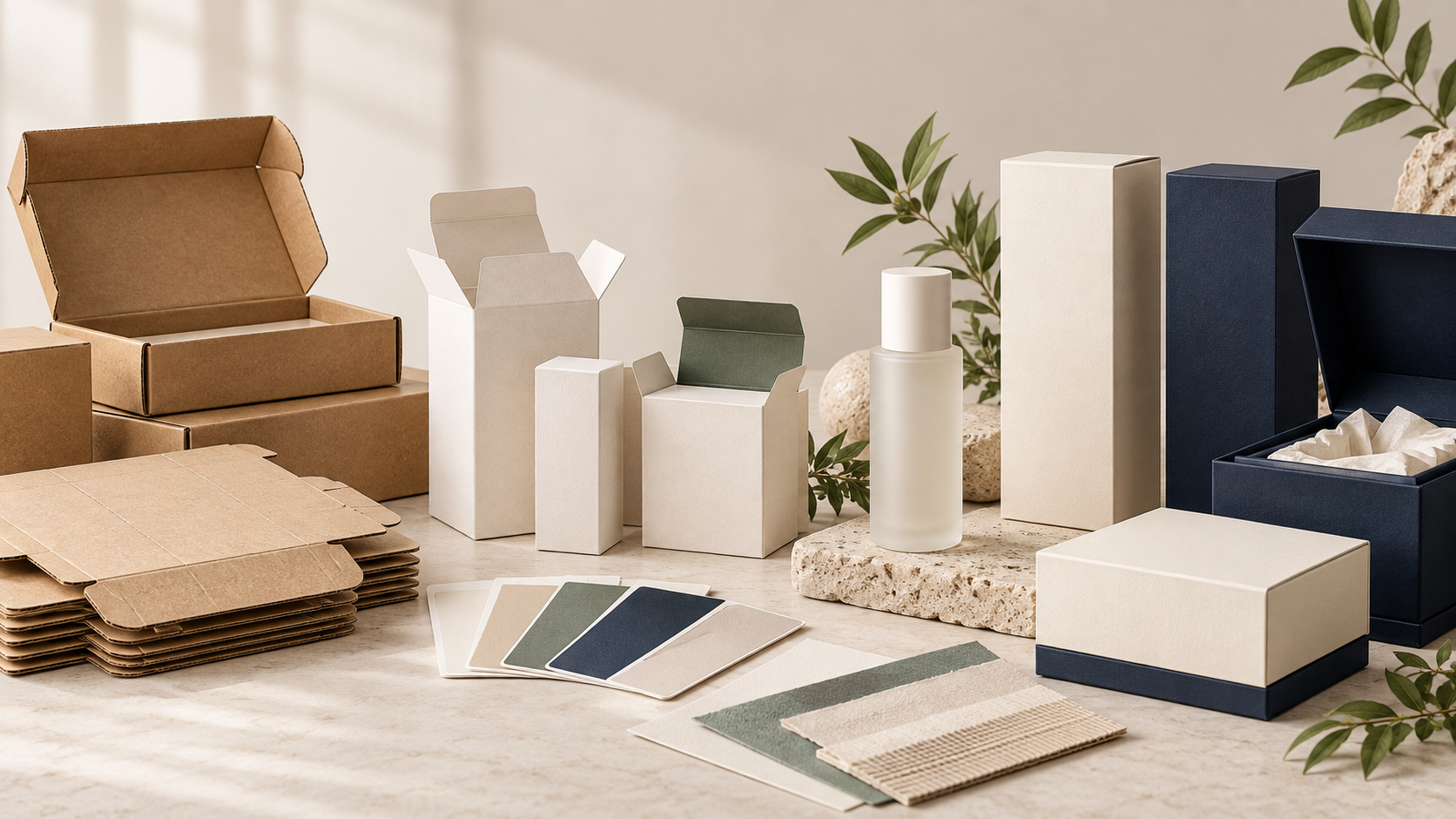
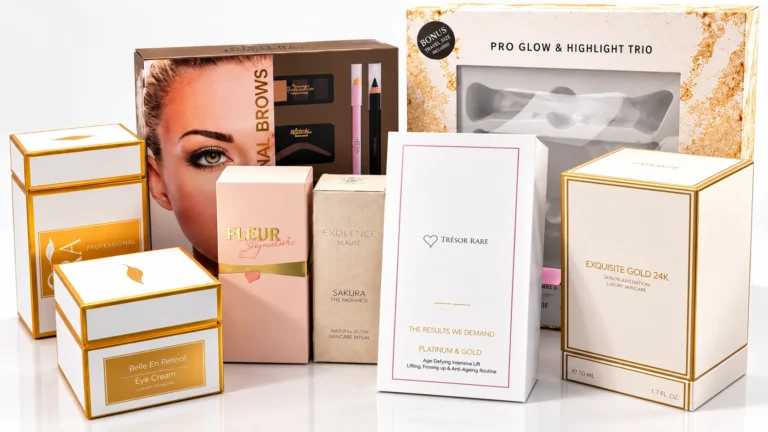
Where to buy cosmetic packaging depends on what you need most: ready-to-use stock boxes, local help with a short run, or packaging built around your product and brand. Beauty businesses commonly compare packaging retailers and distributors, local converters, and factory-direct manufacturers. The best fit comes from matching the supplier’s capabilities to your product, quantity, timeline, and sales channel—not from choosing the lowest unit price on a quote.
To decide where to buy cosmetic packaging, first specify whether you need a stock box or custom packaging, whether it will sit on a retail shelf or travel through parcel shipping, and how many versions or SKUs you expect to order. These details make supplier quotes easier to compare.
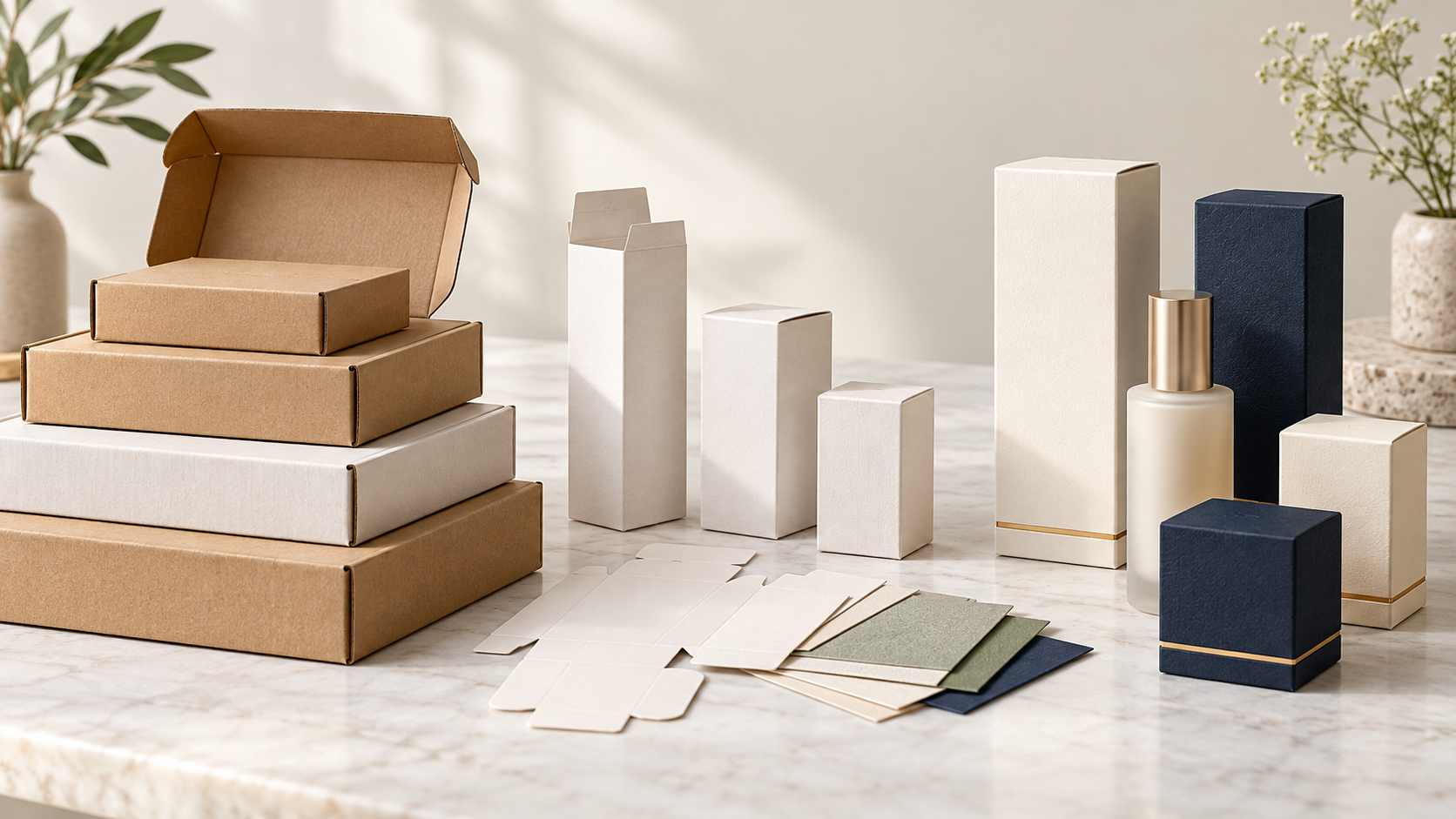
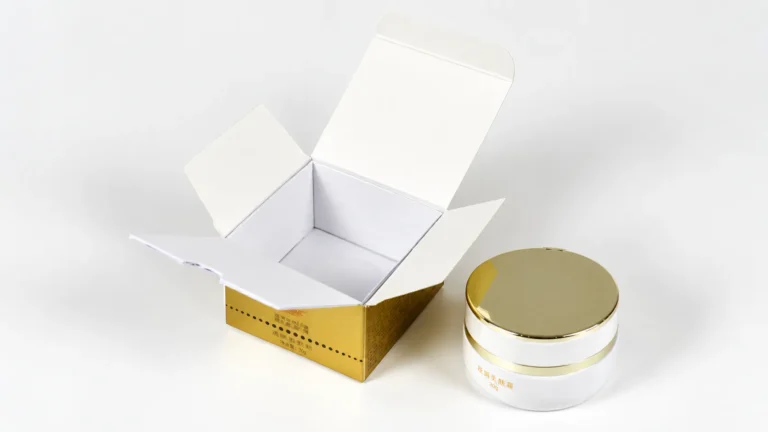
Stock packaging is a practical starting point when you need standard sizes, a smaller initial quantity, or a quick way to test a product launch. Online packaging retailers and local distributors may carry folding cartons, mailers, and gift boxes in ready-made formats. Some suppliers can add labels, sleeves, or simple printing, while others sell unprinted packaging only.
Check the inside dimensions against the finished product, including caps, pumps, droppers, and any protective wrap. Ask whether the listed size is internal or external, how products are packed for shipment, and whether the box is delivered flat or assembled. A stock carton that looks close online can still leave too much movement or fail to fit a wider bottle shoulder.
Stock boxes offer less control over structure, color, and branding. If you add a label or sleeve, confirm that it fits the box and does not cover required product information. For a retail launch, request a physical sample before ordering a large quantity.
If you are deciding where to buy cosmetic packaging locally, a local supplier can make it easier to review samples, discuss artwork, and coordinate in person. Depending on the company, it may be a packaging distributor, a print shop, a converter, or a broker that coordinates production with another facility. The label ‘local supplier’ does not by itself tell you which steps are handled in-house.
Ask what structures and materials the supplier can produce, who creates or checks the dieline, and where printing, finishing, and assembly take place. Confirm how revisions are approved and who will be your contact if the sample does not fit the product. Local coordination may be useful for a pilot or time-sensitive project, but the available formats, customization, and order quantities still need to be confirmed for your specific job.
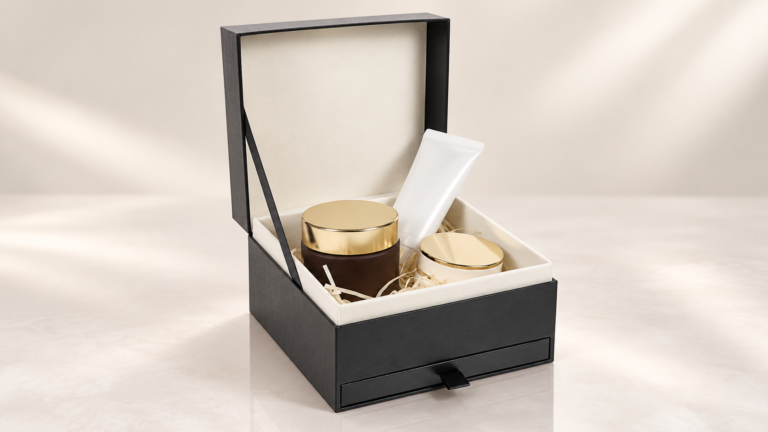
A factory-direct manufacturer is worth evaluating when you need custom dimensions, printed folding cartons, rigid cosmetic boxes, inserts, coordinated sets, or repeat production across several SKUs. Working directly with a manufacturer can give your team a clearer path to discuss structure, material, artwork, sampling, and production together. The actual scope depends on the supplier’s equipment and project setup, so ask which operations are done at the factory and which are outsourced.
For an overseas supplier, include freight, import charges, delivery terms, and the time needed for sample approval and transit in your comparison. Factory-direct pricing does not automatically mean the lowest total cost: tooling, setup, packing, shipping, and the quantity you can use all affect the project. Compare the same specification and destination across quotes.
If you are evaluating a custom format for beauty products, review the available custom cosmetic box options and confirm the structure, material, and insert against your actual product before production.
Use the buying situation to narrow the shortlist:
When deciding where to buy cosmetic packaging, evaluate every supplier against the same checklist. A comparable quote is more useful than a low price attached to an incomplete specification.
Share the dimensions and weight of the finished product, including the primary container and closure. Explain whether the box is for a single item, a multi-piece set, a retail display, subscription shipment, or direct-to-consumer parcel. If the product is glass or has a pump, dropper, or other delicate part, explain what needs to stay in place. The supplier can then assess whether an insert or separate outer shipping carton should be considered.
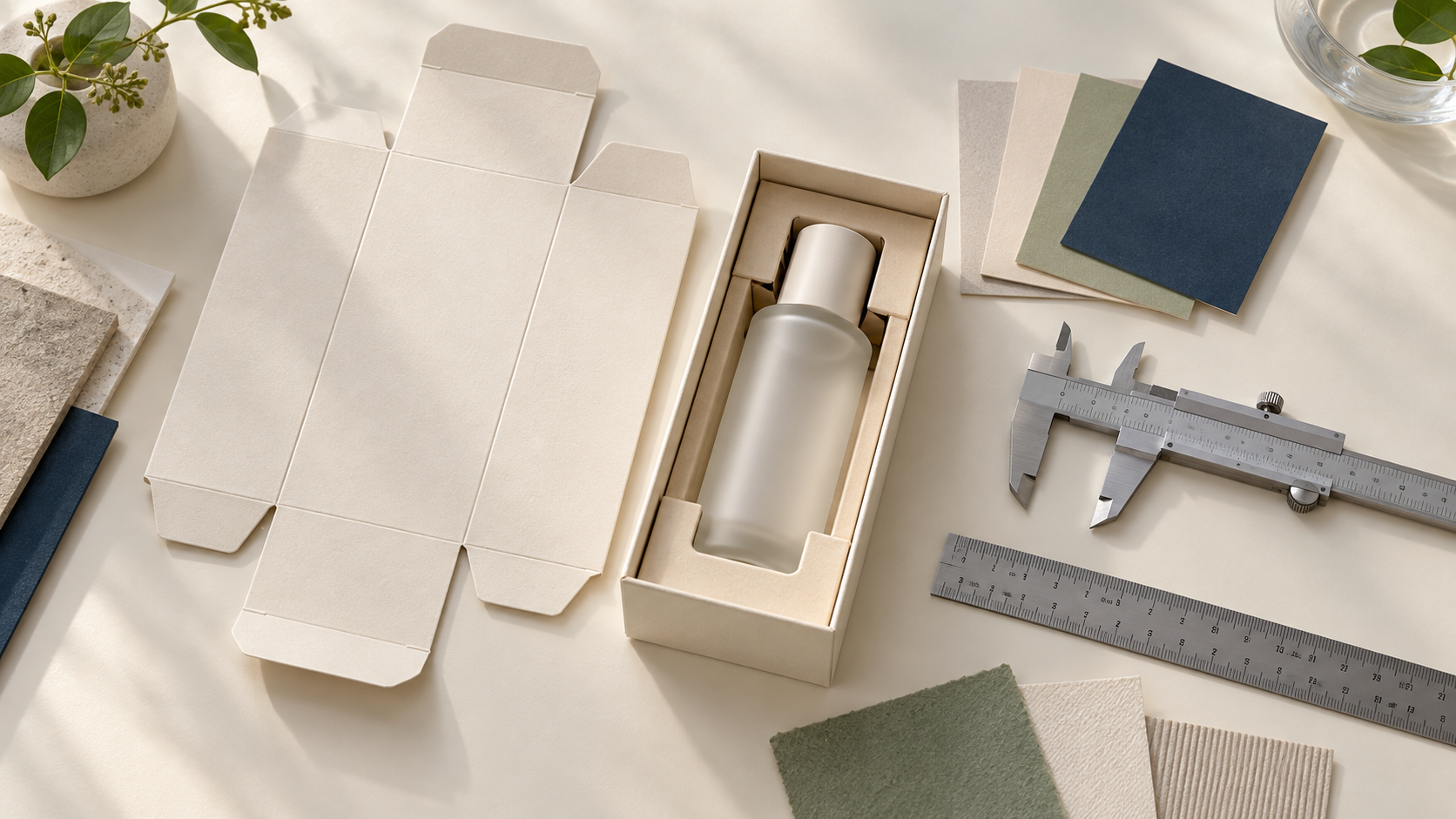
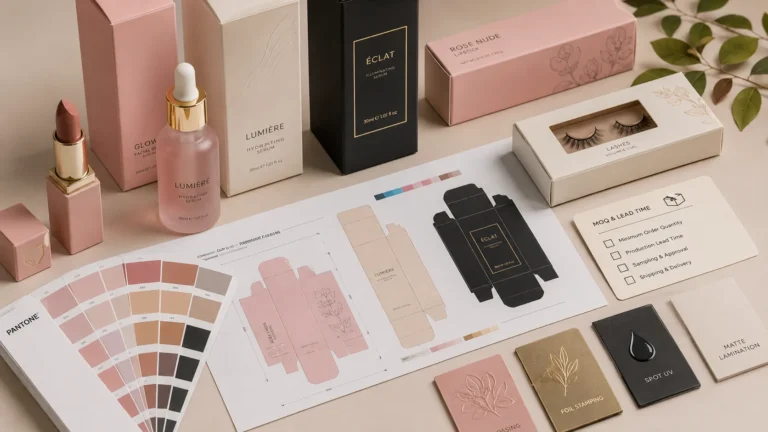
Ask what sample options are available and what each sample will represent. A plain structural sample can help check size and fit; a printed proof or finished sample can help assess color, finish, folds, and assembly. Before approving production, test loading and removal, check that the package closes correctly, and review how it holds up during normal handling. If it will be shipped to customers, evaluate the complete packing setup rather than assuming a retail box alone provides parcel protection.
Request itemized costs for the packaging specification, sampling or tooling if applicable, printing and finishes, packing method, freight, and delivery to your destination. Compare quotes at the same quantities and with the same box dimensions, paper or board, insert, artwork, and finish. Ask which delivery terms are included and which costs remain your responsibility. A unit price is only one part of the purchase decision.
Ask the supplier to separate sample development, sample approval, production, and shipping in the schedule. Confirm how the approved sample or specification will be used to check the finished order, how changes are documented, and what happens if delivered packaging differs from the approved version. For a multi-SKU launch, ask how artwork versions and revisions will be tracked so the correct design is used for each product.
Prepare these details before you request a quote or sample recommendation:
For products marketed in the United States, review the FDA Cosmetics Labeling Guide during artwork preparation and confirm the final package copy for your product.
If you are still deciding where to buy cosmetic packaging, use this cosmetic packaging quote page to share project requirements. Supplier availability, minimums, sample arrangements, and timing vary by structure and order details, so confirm them in the quote rather than assuming a standard offer.
Start by deciding whether a stock box fits or your product needs a custom structure. Then compare a manufacturer, local converter, or distributor based on who produces the packaging, confirmed capabilities, and total delivered cost for the same specification.
No. Compare total delivered cost at the same specification and quantity. Sample or tooling charges, printing, inserts, packing, freight, import costs, and the amount of unused stock can change the overall economics.
Yes, if a ready-made size fits the finished product and the presentation works for your channel. A label or sleeve may add branding, but test the fit and finished appearance with a sample first. If the right size or product protection is unavailable, request a custom option and compare its full project cost.
Send product dimensions and weight, the quantity by SKU, sales channel, box and insert preferences, artwork status, destination, and target timing. Include product photos or drawings when available, and ask the supplier to confirm internal dimensions, sample options, quote scope, and delivery terms.
Ask each supplier what sample types it can provide, what materials and print details they represent, and whether a sample charge or setup fee applies. Use the sample to check the actual product fit, opening and closing, print appearance, and assembly before approving the production specification.